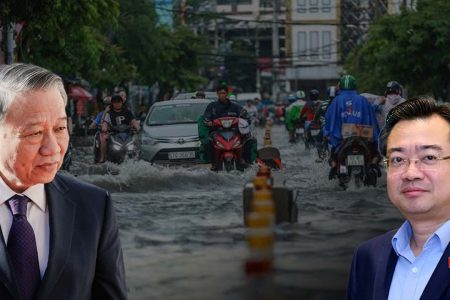
As geopolitical tensions in the Middle East escalate, especially with the risk of energy supply disruptions through the Strait of Hormuz, the global economy immediately feels the shockwaves.
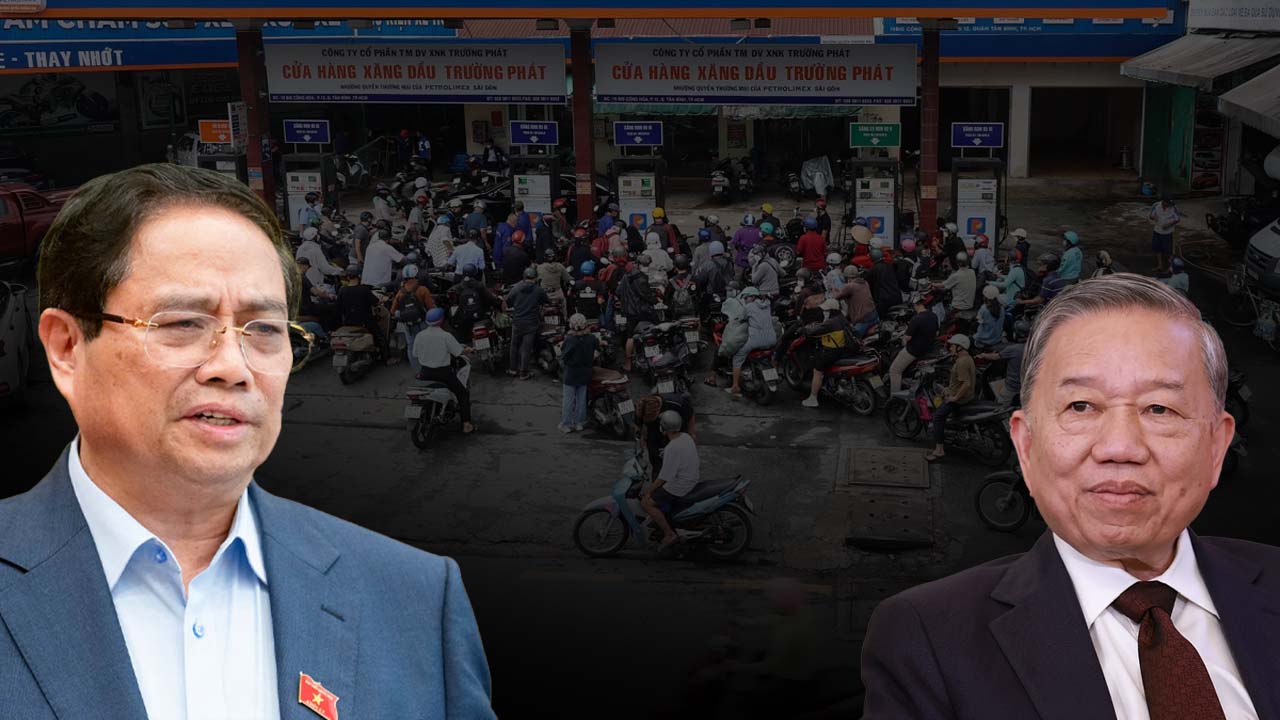
Vietnam Airlines is expected to temporarily suspend some routes starting from April 1 amid limited Jet A-1 fuel supplies and rising fuel prices caused by the war in Iran.
Not only are some domestic routes expected to be suspended, but many carriers have also begun adding fuel surcharges, putting further upward pressure on international airfares.
For Vietnam, an economy with a high degree of openness and significant dependence on imported fuel, these impacts have quickly become evident in gasoline prices, production costs, and market sentiment.
The question now is no longer whether Vietnam’s economy will grow quickly or slowly, but whether the goal of double-digit GDP growth remains feasible in such an uncertain context.
According to international observers, signals from financial markets show how sensitive Vietnam’s economy, as well as others around the world, is to external shocks.
In particular, the trading session dubbed “Black Monday,” during which the VN-Index fell by more than 115 points and hundreds of stocks hit their floor prices, demonstrated this clearly.
These developments reflect not only psychological factors, but also investors’ concerns over the risk of a sudden surge in input costs across the economy.
As energy prices climb, fuel-intensive sectors such as transportation, aviation, and industrial manufacturing immediately come under enormous pressure.
The aviation industry is especially vulnerable, as fuel accounts for nearly 40% of total operating costs, particularly when around 70% of aviation fuel in Vietnam still has to be imported.
The fact that major suppliers such as China and Thailand have prioritized their domestic markets and delayed deliveries has made Vietnam’s energy situation even more difficult.
The possibility of an aviation fuel shortage is not just a problem for the airline industry alone, but also a sign of structural weaknesses in Vietnam’s economic management system.
The gap between the government’s earlier optimistic reports and actual developments is becoming a serious issue. While the government recently reported growth of over 8.2%, the World Bank estimates it at only around 6%, a significantly lower figure.
According to macroeconomic experts, this discrepancy is not merely a matter of calculation methods, but also reflects how the Vietnamese state perceives economic risks.
This is especially worrying for Vietnam, whose economic growth depends heavily on exports. These factors are currently under pressure from multiple directions, while geopolitical risks show no sign of easing.
Once again, the crisis in Iran has exposed the long-standing mentality of “haste makes waste” among the leadership in Ba Dinh. They lack long-term vision, yet always want to create sensational headlines to flatter themselves.
As the global oil price storm continues to take shape, Vietnam’s economy faces a major test of its resilience and strategic adaptability. In that context, the goal of double-digit GDP growth is becoming increasingly challenging.
An economy that wants to sustain high growth rates needs a stable foundation in energy, supply chains, and market confidence.
Should Vietnam’s leaders continue pursuing ambitious targets to maintain development momentum, or should they adjust expectations for double-digit GDP growth in order to prioritize stability and economic security in an increasingly uncertain world?
Trà My – Thoibao.de